
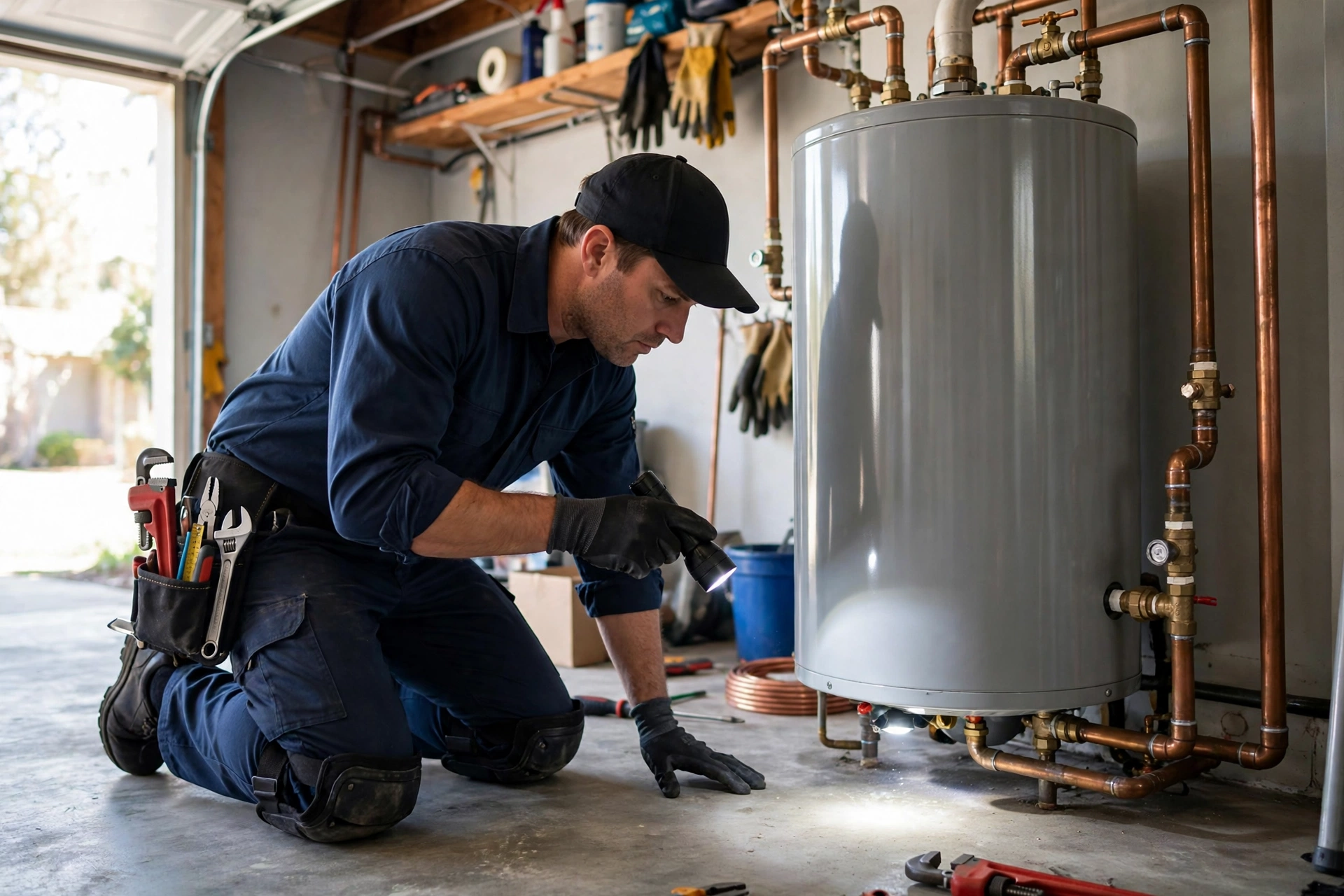
Deep inside your water heater, a simple metal rod is quietly sacrificing itself to keep your tank alive. It is called the anode rod, and most homeowners in Apache Junction have never heard of it — until the day their tank starts leaking and someone explains the rod gave out years ago. This guide covers what the anode rod does, the three types available, how to tell when yours is spent, and what replacement involves.

What an anode rod actually does
Your water heater tank is made of steel. Steel plus water plus oxygen equals rust, so manufacturers coat the tank interior with a thin layer of glass. That lining slows corrosion, but it never covers every square inch — tiny cracks and pinholes are inevitable from manufacturing and from years of heating and cooling cycles.
This is where the anode rod comes in. Through a process called galvanic corrosion, two different metals sitting in water form a tiny electrical circuit, and the more chemically "active" metal corrodes first. The anode rod is deliberately made from a metal more active than steel — usually magnesium or aluminum — so it draws the corrosive reaction to itself instead of the tank walls. It rusts so your tank does not have to.
The rod hangs from the top of the tank, submerged in the water, and slowly dissolves over years of service. As long as a meaningful amount of rod remains, the steel tank stays protected. Once the rod is consumed, corrosion turns its attention to the tank itself — and that is when the countdown to a leak begins.
The three types of anode rods
Not all anode rods are the same. The right choice depends on your water chemistry and whether you have had odor problems.
Magnesium rods
The most common factory-installed rod. Magnesium is highly active, so it provides strong protection — but it dissolves faster, especially in hard or softened water. Across much of Apache Junction, a magnesium rod can be substantially depleted well before the tank itself is old.
Aluminum-zinc rods
A blend of aluminum with a small amount of zinc. These last longer than magnesium and are the go-to choice when hot water has a rotten-egg odor, because the zinc helps suppress the bacterial reaction that causes the smell. Protection is slightly less aggressive than magnesium, but longevity is better.
Powered (impressed-current) rods
Instead of dissolving, these use a small electrical current to provide corrosion protection. They are not consumed, so they never need replacement — but they cost more up front and need a nearby power source. They are popular with homeowners who want a fit-and-forget solution, especially after dealing with recurring odor issues.
Signs your anode rod is worn out
Because the rod hides inside the tank, you have to read indirect clues:
- Rotten-egg smell in hot water only. A depleted or reacting anode is the most common cause of sulfur odors from the hot side.
- Rusty hot water. When cold water runs clear but hot water is discolored, internal corrosion is underway — often because the rod is gone.
- The heater's age. If your unit is several years old and the rod has never been checked, assume it is depleted. In hard-water areas, rods rarely last as long as the tank.
- Visible inspection. If a technician pulls the rod and it is down to a thin wire, coated in calcium, or less than half its original diameter, it is done.
How to check your anode rod
The rod screws into the top of the tank, usually under a plastic cap. Checking it means shutting off power (or gas) and water, relieving pressure through the T&P valve, and unscrewing the rod with a large socket — then lifting it out for a look. It sounds simple, but there are real pitfalls: rods can seize in place, tanks need clearance above them to pull the rod out, and disturbing old fittings can create new leaks. Many homeowners have us check the rod during a routine flush, which keeps the visit efficient.
What anode rod replacement involves
A replacement is straightforward when the old rod cooperates: drain a few gallons to drop the water level below the rod port, unscrew the old rod, wrap the new rod's threads with Teflon tape, and thread it in. The catch is headroom — a standard rod is a few feet long and needs vertical clearance to install. In tight closets, technicians use flexible segmented rods that bend into place. If the old rod is seized, it may need penetrating oil, an impact wrench, or professional extraction. This is also why rod replacement pairs naturally with a tank flush: the tank is already partially drained and the technician is already on site. See our anode rod replacement service for details.
What happens if you never replace it
Nothing dramatic — at first. The glass lining holds for a while, then corrosion finds the weak spots. The tank starts weeping at a seam or fitting, and a tank leak cannot be patched the way a valve can. Skipping a simple rod replacement is one of the most common reasons we replace tanks in the East Valley that could have lasted years longer. Think of the anode rod as the cheapest life insurance your water heater will ever have.
Related Questions
How often should the anode rod be checked in Arizona?
In hard-water areas like Apache Junction, have it inspected around the two-to-three-year mark and expect replacement sooner than in soft-water regions. Manufacturer intervals assume average water — ours is not average.
Can I just remove the anode rod instead of replacing it?
No. Removing it leaves the tank unprotected and can void the manufacturer's warranty. Replace it, don't delete it.
Will a new anode rod fix my rusty hot water?
If the tank itself has not started corroding, often yes. If rust persists after a fresh rod, the tank interior may already be damaged — that is a replacement conversation.