
A leaking tank is a leaking tank — but whether your heater runs on electricity or gas changes where leaks start, what is dangerous about them, and what you should shut off first. If you are not sure which type you have (many Apache Junction homeowners inherit their heater with the house), this guide will help you tell, and tell you exactly what to do when either type springs a leak.

What both types share
Strip away the fuel source and most water heaters are the same steel tank: cold water in, hot water out, a T&P relief valve, a drain valve, and a glass-lined steel shell wrapped in insulation. Both types corrode the same way, both suffer from sediment, and both fail at seams and fittings. The anode rod protects both. So if your leak is a weeping tank seam or a corroded fitting, the fuel type barely matters — the tank is done either way.
Where electric heaters tend to leak
Electric tanks have two heating elements screwed into the side of the tank, each sealed with a gasket. Those element gaskets are a leak point gas heaters simply do not have — they harden with age and heat cycles, then start weeping. Electric heaters also have thermostat access panels on the tank side; condensation or minor seepage behind these panels can go unnoticed because they are covered. And because electric tanks have no flue running up the middle, their failure pattern skews toward the lower element area, where sediment piles deepest and overheats the tank bottom.
Where gas heaters tend to leak
Gas heaters have a burner assembly underneath and a flue running up through the center of the tank. The flue is surrounded by water on all sides, making it a prime corrosion site — flue-adjacent leaks are a classic gas-heater failure. The gas control valve at the bottom has threaded connections that can seep. Gas units also run hotter at the tank bottom by design (the burner is right there), which accelerates sediment baking and bottom corrosion. On the plus side, gas heaters have no side-wall element ports to leak from.
The safety differences that matter
This is where fuel type genuinely changes the emergency. An electric heater leaking onto its own wiring or into standing water around its base is an electrocution risk — water and 240 volts do not mix, and the breaker must be off before you touch anything wet. A gas heater adds combustion to the picture: if you smell gas (rotten eggs), the leak response stops being about water and starts being about getting out and calling the gas utility. Water dripping onto a gas burner can also extinguish the pilot or cause rust that eventually affects the gas controls. Neither type is "safer" to ignore — they are dangerous in different ways.
What to shut off first — by type
- Electric: breaker first (usually a double-pole breaker labeled "water heater"), then the cold-water shutoff valve above the tank. Never touch a leaking electric heater before the breaker is off.
- Gas: cold-water shutoff first, then turn the gas control valve to "pilot" or "off." If you smell gas at any point, skip everything, leave the area, and call for help from outside.
- Both: if the leak is severe, the main water shutoff for the house is the fastest way to stop the flow.
Does one type leak more often?
Honestly, maintenance history matters far more than fuel type. A flushed electric tank with a fresh anode will outlast a neglected gas tank every time, and vice versa. In Apache Junction's hard water, sediment and depleted anodes kill both types on roughly the same schedule. Choose your next heater based on energy costs and venting practicality — not on which one you think leaks less.
Related Questions
How do I tell if my water heater is gas or electric?
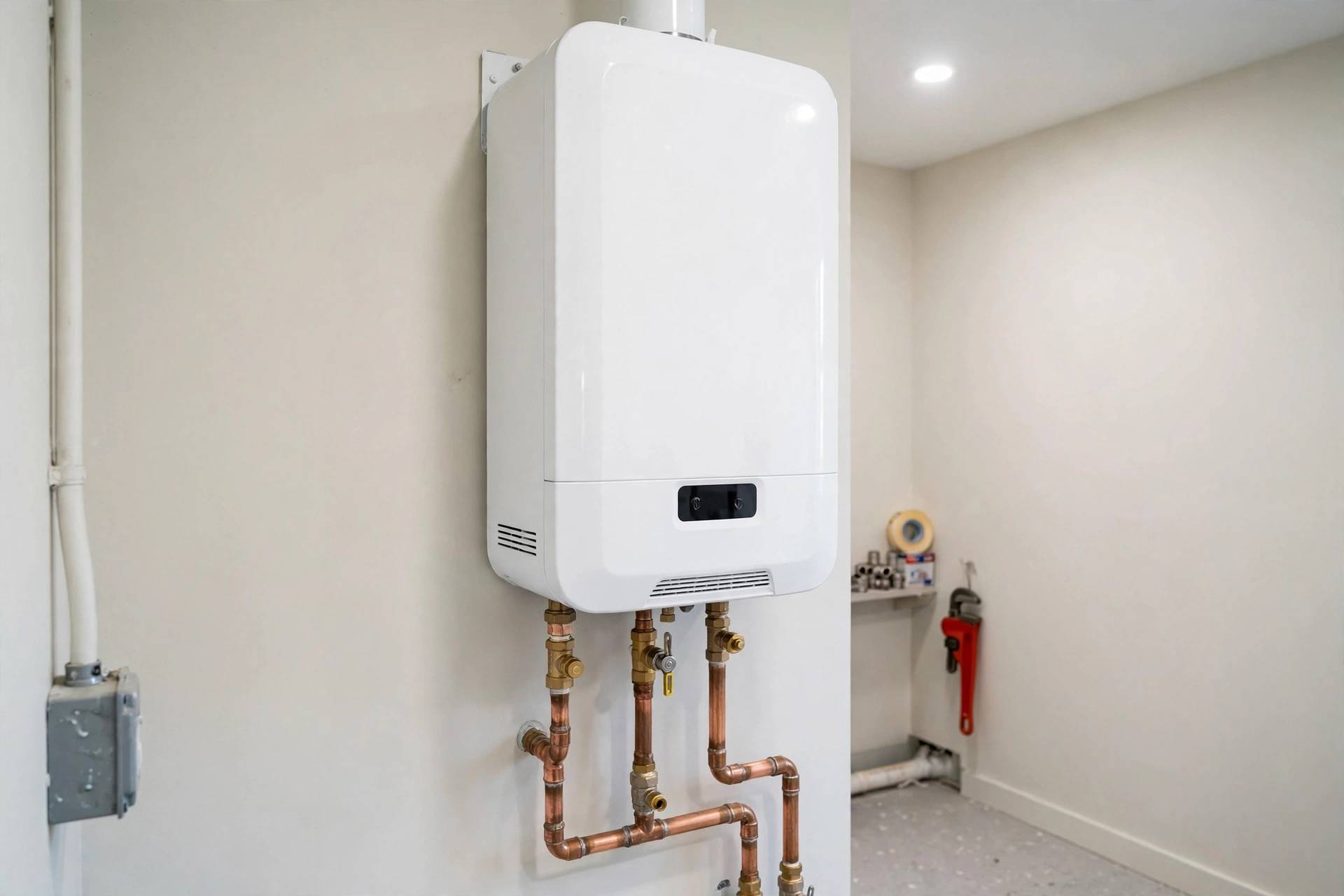
Look at the top and bottom. A gas heater has a vent pipe running up from the top and a gas line with a shutoff valve near the bottom, plus a pilot viewing window. An electric heater has a heavy electrical cable entering the top or side and a breaker labeled for it in your panel.
Is it safe to mop up water around an electric water heater?
Only after the breaker is off and you have confirmed power is cut. If water has reached outlets, the breaker panel area, or you are unsure, call a professional instead.
I smell gas near my water heater — what do I do?
Do not light anything, do not flip switches, and do not try to find the source. Leave the area and call your gas utility's emergency line from outside, then call us at (833) 713-2101 once the gas situation is declared safe.