
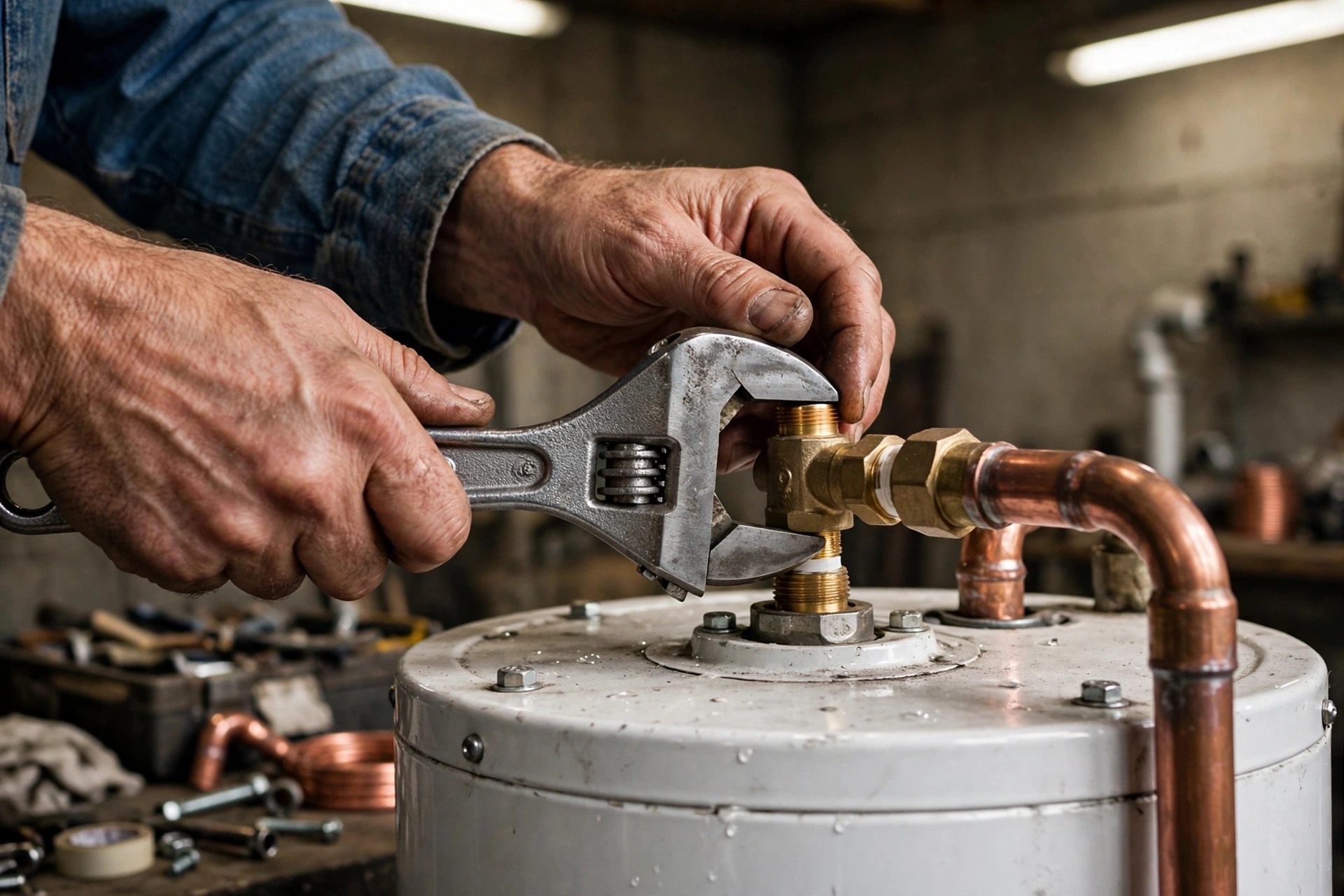
That small tank mounted above or beside your water heater is not a spare — it is the expansion tank, and it is the reason your plumbing survives the physics of heating water. Many Apache Junction homeowners have one and have never thought about it; some homes need one and do not have it. This guide explains what it does, how to tell when it is failing, and how to keep it working.

What thermal expansion is
Water expands when heated — roughly 2 to 4 percent in volume going from cold to hot. That does not sound like much until you consider a 50-gallon tank: several extra pints of water with nowhere to go. In older "open" plumbing systems, the expanded water simply pushed back into the city main. But modern homes have check valves, pressure-reducing valves, or backflow preventers that create a closed system — water can come in, but it cannot go back out. Every heating cycle then becomes a pressure spike, repeated dozens of times a day, hammering every seal and joint in the system.
How an expansion tank works
An expansion tank is a small steel tank divided inside by a rubber bladder (or diaphragm). One side of the bladder holds pressurized air; the other connects to your plumbing. When heated water expands, instead of spiking system pressure, the extra volume pushes into the tank and compresses the air cushion — air squeezes easily, water does not. When the system cools, the air pushes the water back out. It is elegantly simple, has no moving parts, and silently absorbs thousands of pressure cycles over its life.
Signs you need an expansion tank (or yours has failed)
- The T&P relief valve drips or discharges — the classic symptom. The valve is relieving pressure the expansion tank should have absorbed.
- No expansion tank is installed on a closed system. If you have a PRV or check valve at the main and no small tank near the heater, you are missing required protection.
- The tank feels heavy or waterlogged. Tap it: the air side should sound hollow, the water side solid. If the whole thing sounds solid or feels unusually heavy, the bladder has failed and the tank is full of water.
- Water dribbles from the tank's air valve (the Schrader valve on top, like a tire valve). Air side should hold air only — water there means a ruptured bladder.
- Pressure gauge spikes during heating cycles but reads normal otherwise — textbook thermal expansion with no working tank.
Where expansion tanks get installed
Typically on the cold-water supply line near the water heater, mounted vertically with the connection at the bottom so the air stays trapped on top. They need solid support — a waterlogged failed tank is heavy, and a tank hanging from a pipe puts stress on the joint. Orientation and support details are why this is plumber work rather than a casual DIY bracket.
Sizing and air-charge basics
Tanks are sized to the water heater capacity and household pressure — a typical residential heater pairs with a small 2-gallon tank, larger heaters or higher pressures need more. Just as important is the air charge: the bladder's air pressure should match the household's static water pressure (measured with a gauge when no water is running). A tank charged to the wrong pressure barely works — too low and it waterlogs immediately; too high and it never engages. Checking and adjusting the charge takes a tire gauge and a few minutes, and it is part of any competent annual water heater service.
Maintenance and lifespan
Expansion tanks are wear items — bladders fatigue and fail, typically within a span of years rather than decades. Annual checks are simple: tap-test for waterlogging, check the air valve for moisture, and verify the air charge matches house pressure. A failed tank often announces itself through the T&P valve, but catching it at a maintenance visit is cheaper and calmer. If your T&P valve has started dripping in Apache Junction, call (833) 713-2101 — we will check the expansion tank before replacing anything else.
Related Questions
Is an expansion tank required by code?
In most jurisdictions with closed plumbing systems, yes — plumbing codes generally require thermal expansion control. Even where not strictly mandated, it's cheap protection against pressure damage.
How do I know if my plumbing system is 'closed'?
Look for a pressure-reducing valve (bell-shaped device) or check valve/backflow preventer where the main water line enters the house. If present, your system is closed and expansion has nowhere to go without a tank.
Can I just remove a failed expansion tank?
Removing it without addressing expansion leaves the T&P valve as your only pressure relief — expect dripping, and added stress on the whole system. Replace the tank; it's a modest job.