
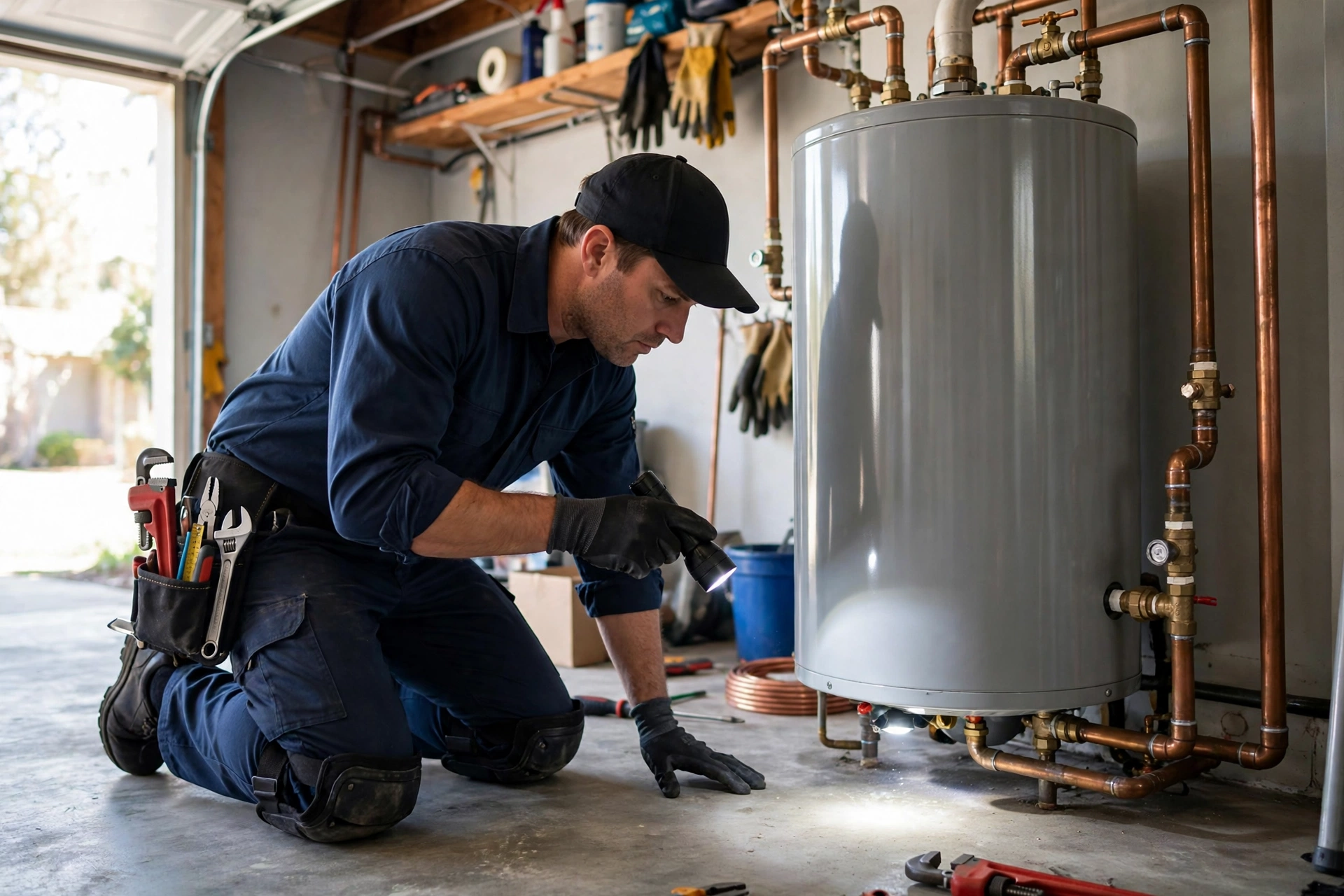
Every water heater leak we repair in Apache Junction had a backstory — years of sediment, a long-dead anode rod, pressure nobody checked. Almost all of it was preventable. Here's the playbook.
1. Flush on schedule — the highest-value habit
Annual flushing removes sediment before it hardens. In 15–25-grain water, this single habit prevents the overheating that cracks linings, burns elements, and pops relief valves. Mark it on the calendar like an oil change.
2. Replace the anode rod before it's gone
Check every 2 years; replace when depleted. A $200–$400 rod replacement is the cheapest corrosion insurance in plumbing — it quite literally sacrifices itself so your tank doesn't have to.
3. Control pressure and expansion
Keep incoming pressure under 80 PSI and maintain your expansion tank's air charge. Uncontrolled pressure is what turns minor weaknesses into burst failures.
4. Upgrade the weak links proactively
Plastic drain valves, aging supply lines, and corroding dielectric unions are all cheap to replace before they fail and expensive after. A preemptive brass drain valve ($150–$275) beats a flooded garage every time.
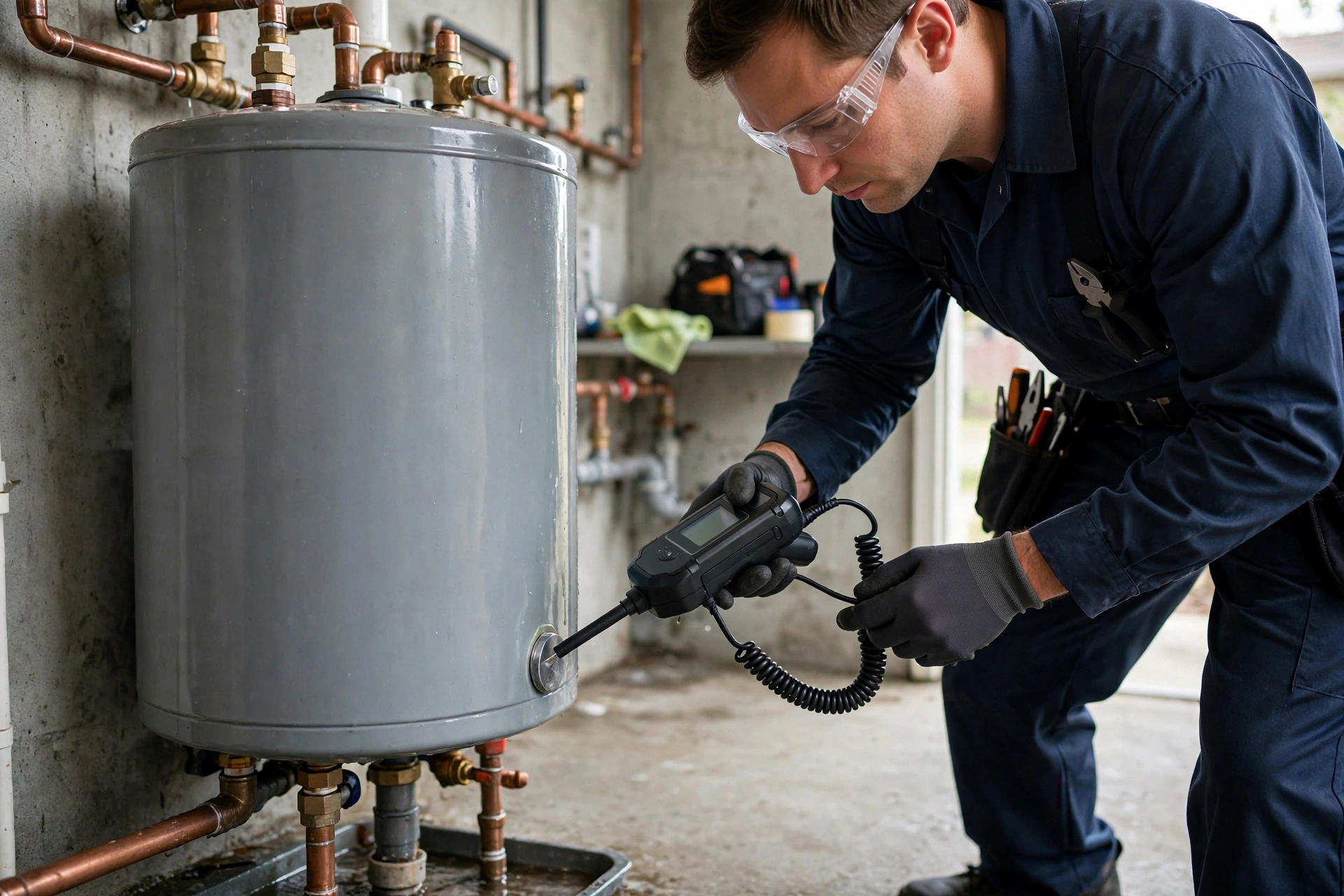
5. Install a pan and a leak sensor
A drain pan ($250–$500 installed) contains the inevitable; a $30 Wi-Fi leak sensor tells you the moment it happens. Together they turn a catastrophe into a phone call.
6. Consider treating the water itself
A softener or scale-reduction system attacks the root cause — the minerals. For Apache Junction homes, it's the single biggest longevity lever available.
Put it on autopilot
Our annual maintenance visit handles flushing, anode inspection, valve testing, and pressure checks in one appointment. One call to (833) 713-2101 and your heater is protected for the year.
Related Questions
What's the one thing I should do if I do nothing else?
Flush the tank annually. It addresses the root cause — sediment — behind most Arizona heater failures.
How much does prevention cost versus repair?
Annual maintenance runs a fraction of a single major repair, and a maintained heater lasts 4–6 years longer — delaying a $1,200–$3,500 replacement.
Will a water softener eliminate maintenance?
No — it dramatically reduces scale but doesn't eliminate anode depletion or valve aging. Think of it as turning 'critical' maintenance into 'routine' maintenance.