
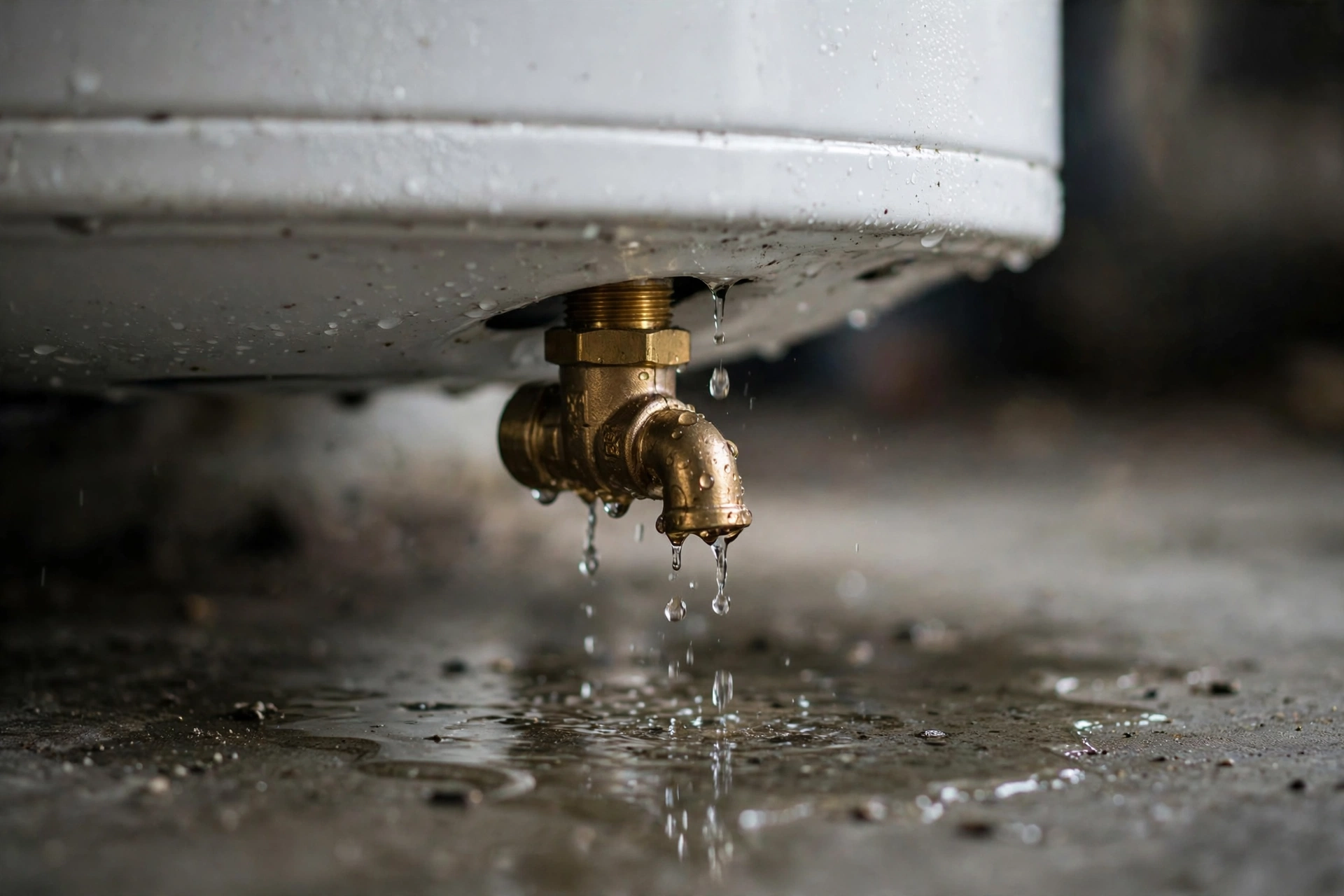
A drain pan is a shallow tray that sits under your water heater and catches slow drips before they reach your floor. It is one of the simplest, most overlooked pieces of leak protection in a home — and in the wrong location, a missing pan is the difference between a mopped-up puddle and a ruined ceiling. Here is what drain pans do, how to choose one, and what proper installation looks like.

What a drain pan does (and does not do)
A drain pan catches water that escapes from the tank, fittings, or valves and directs it to a drain line instead of letting it spread across the floor. It handles slow seeps, weeping fittings, a dripping T&P discharge, and the early stages of a tank failure. What it cannot do is contain a catastrophic tank rupture — fifty gallons released at once will overwhelm any pan. Think of it as early-warning containment, not flood insurance.
Where drain pans matter most
Pans earn their keep anywhere a leak would damage something expensive: heaters in interior closets, laundry rooms, attics, or above finished living space. In Apache Junction, many heaters sit in garages where a small leak is merely annoying — but a garage pan still keeps water away from drywall, stored belongings, and the water heater's own gas controls. If your heater is in an attic, a pan is not optional in any practical sense: an attic leak rains directly through ceilings below.
Choosing the right pan
Three things matter when selecting a pan:
- Diameter. The pan should be at least a couple of inches wider than the tank on every side — water that misses the pan might as well not have a pan at all.
- Material. Aluminum and heavy-gauge plastic are both common. Aluminum resists heat and UV better; quality plastic resists corrosion. Avoid thin, flimsy pans that crack under the tank's weight.
- Drain fitting. A pan without a drain line is just a shallow bowl that overflows. Choose a pan with a proper drain outlet (typically 3/4-inch or 1-inch) and plan where the line will run.
Installation overview
For a new heater installation, the pan simply goes under the tank before it is set in place — the easiest possible scenario. Retrofitting a pan under an existing heater is harder, since the tank must be disconnected and lifted, which is why pan installation is most economical when bundled with a heater replacement or a major repair. Either way, the key steps are: level the pan so water flows toward the drain outlet, connect a drain line that slopes continuously downward, and terminate the line somewhere visible — outside, to a floor drain, or somewhere you will actually notice water flowing. A drain line that disappears into a wall cavity defeats the purpose. Our water heater pan installation service covers both new and retrofit installs.
Common mistakes to avoid
We see the same pan mistakes repeatedly: a pan with no drain line attached at all; a drain line that terminates inside the wall or under the house where nobody will see it; a pan too small for the tank; and the heater sitting directly in standing water because the line clogged. A pan is a system — tray plus clear drain line plus visible termination — not just a tray.
How to tell if your existing pan is doing its job
Already have a pan? Give it a quick inspection once a year. Pour a cup of water into the pan and watch: it should flow promptly toward the drain outlet and disappear down the line. If water sits, the pan is not level or the line is clogged — both easy fixes before they matter. Check that the drain line is still connected at both ends (they work loose over time), that the termination point is still visible and clear, and that the pan itself has no cracks. A pan that cannot drain is just a decoration, and this two-minute test is the difference.
Drain pans and leak alarms work better together
A pan handles the water; a ten-dollar water alarm handles the awareness. Place a battery-powered leak alarm in the pan and you will know about a drip the hour it starts instead of discovering it weeks later. For attic installations, this combination is the minimum sensible protection.
Related Questions
Do I need a plumber to install a drain pan?
For a new heater install, the pan goes in as part of the job. Retrofitting under an existing tank means disconnecting water, gas or power, and lifting a heavy tank — that is professional work for most homeowners.
Can a pan be added to my existing water heater?
Yes, but the tank has to be lifted off its stand and set into the pan, so it makes the most sense to schedule it alongside a repair visit or replacement.
Does a drain pan make my water heater leak-proof?
No. It contains slow leaks and directs them to a drain. A sudden tank failure will overwhelm it — which is why pairing a pan with a leak alarm is the smart move.