
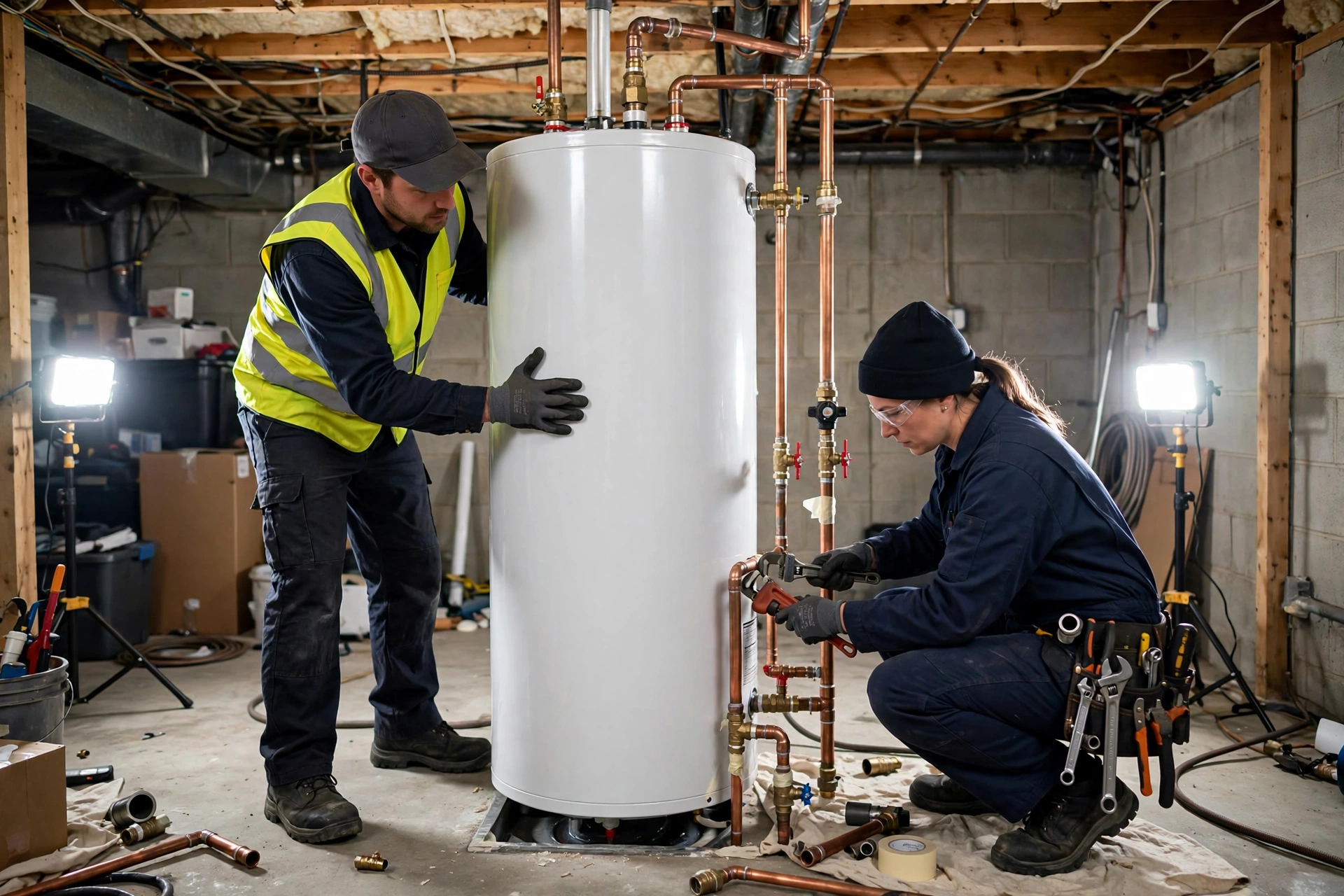
Most homeowners never choose where their water heater sits — the builder decided decades ago. But when it comes time to replace or relocate, the location matters enormously: for leak damage risk, for efficiency, and for how miserable (or easy) service day will be. Here is an honest rundown of the three most common placements in Apache Junction-area homes.

Garage placement
The default in much of the East Valley, and often the most practical.
Pros: Leaks damage concrete, not living space — a garage leak is an inconvenience, not a catastrophe. Access for service and replacement is easy; technicians can wheel a new tank straight in. Ventilation for gas units is straightforward, and there is usually room for a drain pan with a proper drain line. In our climate, freezing is essentially a non-issue.
Cons: Summer garage heat makes the heater work in a hot ambient environment (less of an efficiency factor than you might think, but real). The heater competes for space with cars, storage, and workshops. Code requires protection from vehicle impact (bollards or equivalent) and elevation of ignition sources above the garage floor for gas units.
Attic placement
Common in homes where the garage was converted or space is tight — and the riskiest location by far.
Pros: Frees up living and garage space entirely. Shorter hot-water runs to upstairs bathrooms in two-story homes.
Cons: A leak rains through the ceiling into living space below — attic leaks cause the most expensive water damage we see. Summer attic temperatures in Arizona are brutal, accelerating component aging. Service access is miserable: technicians haul tanks up pull-down stairs, and routine maintenance gets skipped because nobody wants to climb up there. Drain pans with drain lines are absolutely mandatory, and even then, a pan only handles slow leaks. If your heater is in the attic, a leak alarm is not optional.
Interior closet or utility room
Tucked inside the home's envelope, common in apartments, condos, and smaller homes.
Pros: Protected from temperature extremes, which is gentle on the equipment. Short pipe runs mean faster hot water at taps. Easy access encourages actual maintenance.
Cons: A leak soaks flooring, drywall, and whatever shares the closet — the damage radius is immediate. Space is tight, which complicates replacement (measure doorways before buying the new tank) and can make anode rod service impossible without flexible segmented rods. Combustion air requirements for gas units in tight closets need proper venting — a real code and safety consideration.
What about outdoor enclosures?
Less common but seen around the Valley: heaters in exterior closets or enclosures. These keep leaks outside entirely, but expose the unit to dust, pests, and summer heat, and freeze protection — while rarely needed here — becomes your problem rather than the building's. Enclosures must still provide combustion air for gas units and service clearance.
Questions to ask before a relocation
If you are seriously considering moving the heater, answer these first: where will the new water, gas or electrical, and venting runs go, and what walls or slabs do they cross? Does the proposed spot meet code for combustion air, drain pan drainage, and service clearance on all sides? Will the move lengthen hot-water runs to the farthest fixtures (longer runs mean longer waits and more wasted water)? And does the new location keep the T&P discharge pipe routable to a safe termination? If any answer is "not sure," get the relocation quoted as its own project with a site visit — phone estimates for moves are guesswork.
What matters most in Apache Junction
Three location factors dominate here: leak consequence (garage beats attic every time), service access (if a technician cannot comfortably reach it, maintenance will not happen), and drainage (wherever the heater sits, a pan with a real drain line and a leak alarm should be part of the installation). Relocating a heater is a significant plumbing project — new water lines, possibly new gas or electrical runs, and venting — so most homeowners optimize the location they have rather than moving it. If you are replacing a heater and considering a move, talk it through with us at (833) 713-2101 before the old tank comes out; location decisions are much cheaper on paper than mid-installation.
Related Questions
Can I move my water heater to a different location?
Yes, but it's a real project: extending water lines, running new gas or electrical service, venting, and code compliance for the new spot. Get it quoted as its own job, not as an afterthought during a replacement.
Is it safe to have a gas water heater in a bedroom closet?
Bedroom and bathroom closets have strict code requirements for gas appliances, including sealed combustion or specific venting. Many existing setups are grandfathered but wouldn't pass today — have it evaluated before assuming it's fine.
My water heater is in the attic — what protection do I need?
At minimum: a properly sized drain pan with a drain line terminating somewhere visible, plus a water leak alarm in the pan. Consider both non-negotiable for attic installations.