
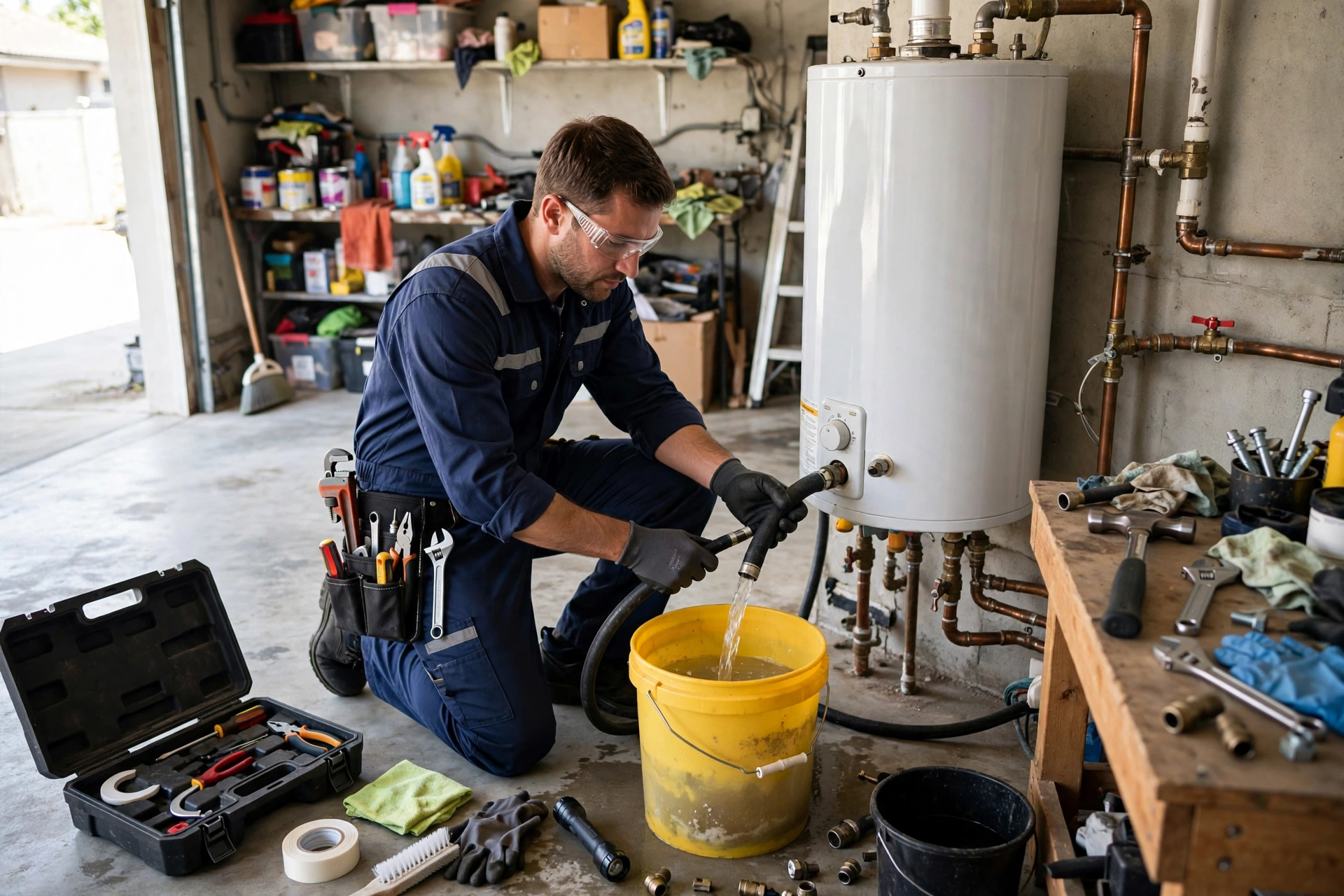
In Apache Junction's 15–25-grain hard water, "maintenance-free" is a myth that costs homeowners thousands. This once-a-year checklist — about 90 minutes of work — is the difference between a heater that dies at 7 and one that serves at 12+.
1. Flush the sediment (every 12 months)
Shut water and fuel, attach a hose to the drain valve, and flush until water runs clear. In our water, expect significant mineral discharge the first time. If the drain valve is seized — common — that's a sign it needs replacing with a full-port brass valve.
2. Inspect the anode rod (every 24 months)
Extract the rod and look: if more than 6 inches of core wire shows or it's caked in calcium, replace it. In Apache Junction, plan on replacement every 2–3 years — this single task prevents most tank corrosion.
3. Test the T&P valve (every 12 months)
Lift the lever briefly; water should flow out the discharge pipe and stop completely when released. Dripping afterward means the valve needs replacement.
4. Check for thermal expansion (every 12 months)
If you have a closed system, verify the expansion tank holds air charge (tap it — top should ring hollow, bottom thud). A waterlogged expansion tank protects nothing.
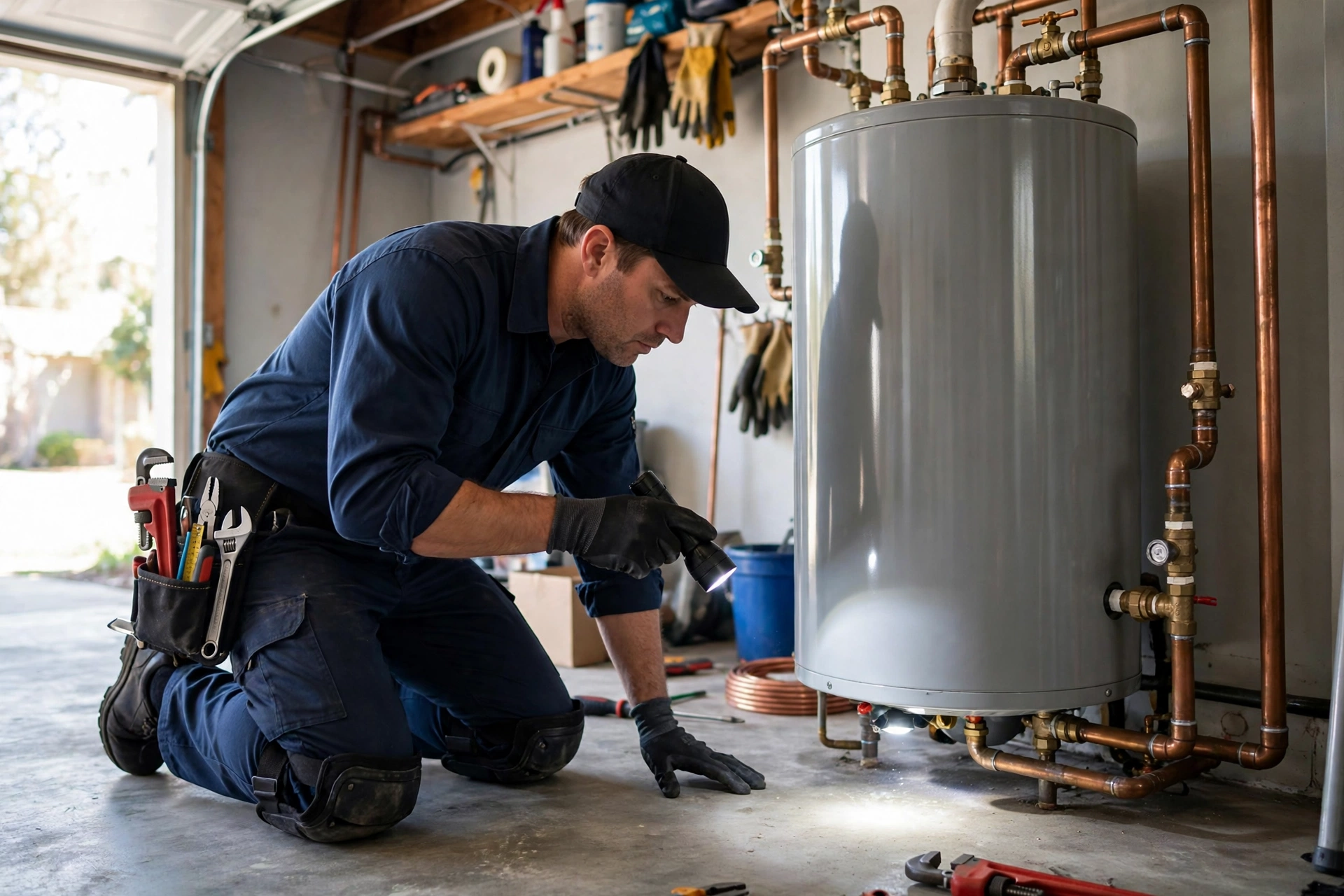
5. Inspect fittings and the pan (every 12 months)
Look for green/white crust on inlet, outlet, and valve connections — early seepage you can catch cheap. Confirm the drain pan (if any) is intact and its drain line is clear.
6. Verify temperature setting (every 12 months)
Confirm 120°F at the tap with a thermometer. Higher settings accelerate scale formation and scald risk.
DIY vs. professional maintenance
Flushing and valve tests are reasonable DIY if you're comfortable. Anode replacement — often seized, requiring serious torque in tight spaces — is where most homeowners call us. Our annual maintenance visit covers the full checklist for one flat price: call (833) 713-2101 to schedule.
Related Questions
What happens if I never flush my water heater?
Sediment hardens into an insulating layer that overheats the tank bottom, burns out elements, cracks the glass lining, and eventually causes leaks — typically cutting heater life by 30–50% here.
Is professional maintenance worth it versus DIY?
If you're handy, flushing is DIY-able. But our visit includes anode inspection, pressure testing, and expansion checks most homeowners skip — the items that actually prevent failures.
When is the best time of year for maintenance?
Spring, before the brutal summer heat stresses the system. But any maintenance beats none — schedule when you think of it.