
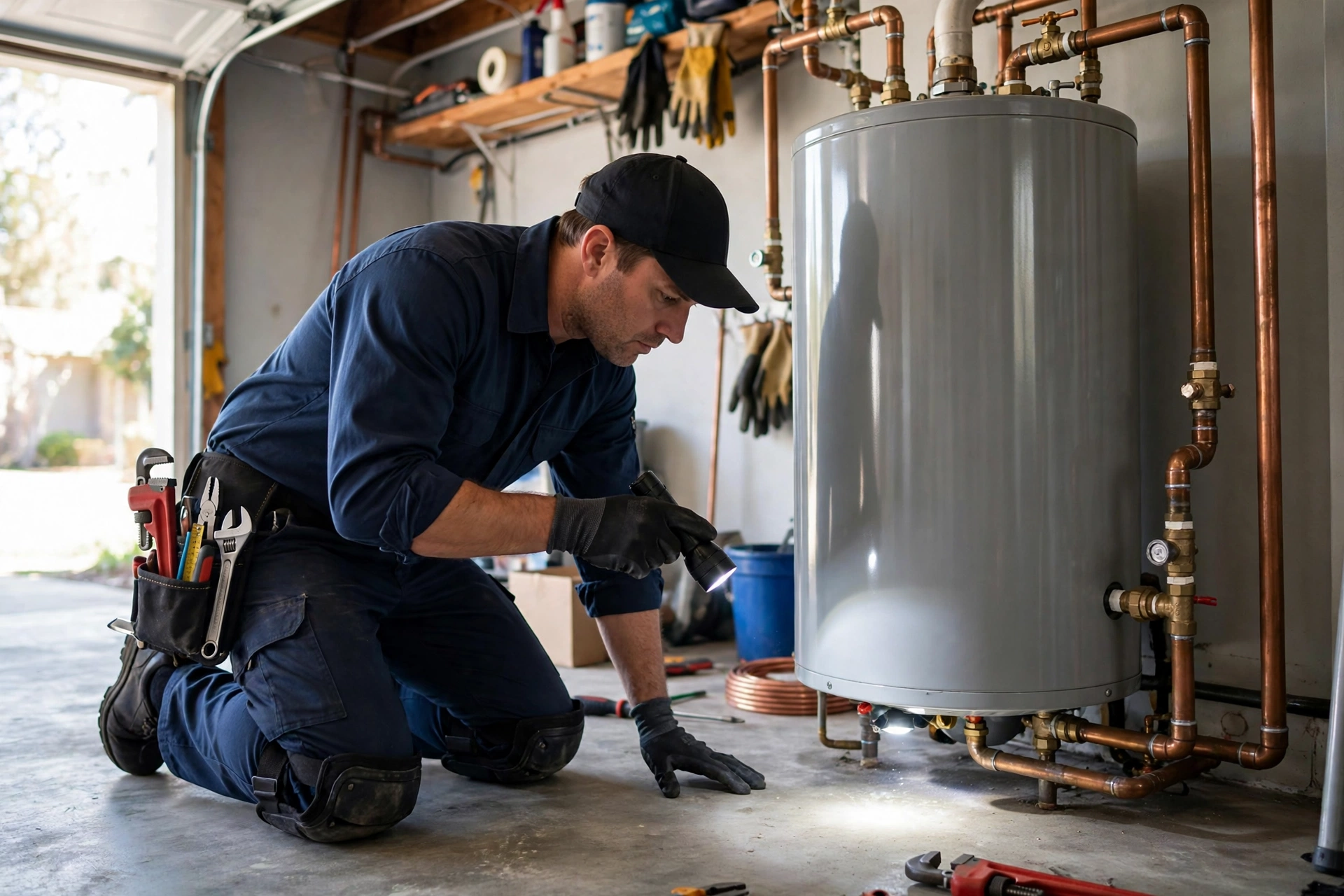
No pilot light, no hot water — on a gas water heater, that little blue flame is the gatekeeper for everything. A pilot that will not stay lit is one of the most common gas-heater complaints we hear in Apache Junction, and the causes range from a five-minute fix to a failing gas valve. Here is what makes pilots go out, how to relight safely, and when to call a professional.

How the pilot system works
The pilot is a small, continuous gas flame at the base of the tank. Its heat keeps a device called the thermocouple hot; the thermocouple generates a tiny electrical current that holds the gas valve open. If the flame goes out, the thermocouple cools, the current stops, and the gas valve snaps shut — a safety design that prevents unburned gas from filling your garage. So when a pilot "won't stay lit," what is really happening is that something is interrupting this chain: the flame, the thermocouple signal, or the valve itself.
Common causes of a pilot that won't stay lit
- A failing thermocouple. The number-one cause. Thermocouples weaken with age and heat cycles until they can no longer generate enough current to hold the valve open. The pilot lights fine, then dies the moment you release the button.
- A dirty or clogged pilot orifice. Dust, lint, and spider webs love pilot assemblies. A partially blocked orifice makes a weak, yellow, wavering flame that cannot properly heat the thermocouple.
- A misaligned thermocouple. The thermocouple tip must sit directly in the pilot flame. If it has bent or shifted, it stays too cool even with a healthy flame.
- Gas supply issues. A partially closed gas valve, a kinked flex line, or — after utility work — air in the line can starve the pilot.
- Drafts. Garage heaters near open doors or attic units near vents can have their pilots literally blown out by air movement.
- A failing gas control valve. Least common but most expensive: the valve itself no longer responds to the thermocouple signal.
Safe relighting steps
Most gas heaters have relighting instructions on a label right on the tank — follow those first, since designs vary. The general sequence: turn the gas control knob to "off" and wait several minutes for any gas to dissipate; turn it to "pilot"; press and hold the pilot button (or igniter) while lighting the pilot; keep holding for 30 to 60 seconds so the thermocouple heats up; then release slowly and turn the knob to your temperature setting. If the pilot lights but dies when you release the button, the thermocouple is the likely culprit — do not keep retrying indefinitely.
When it won't stay lit: what a technician checks
A professional works through the chain methodically: pilot flame quality (strong blue cone, or weak and yellow?), thermocouple output (measured in millivolts — a weak reading condemns it), thermocouple positioning, pilot orifice cleanliness, gas pressure at the valve, and finally the valve itself. Thermocouple replacement is a quick, routine job; gas valve replacement is more involved and prompts a look at the tank's overall age and condition. Either way, diagnosis takes the guesswork out — most "won't stay lit" calls in our experience trace to the thermocouple or a dirty pilot, both straightforward fixes.
Prevention
Keep the area around the burner clean and free of lint, dust, and stored items (combustibles near a gas heater are a hazard regardless). During annual maintenance, the pilot assembly gets cleaned and the flame inspected — a two-minute check that prevents most surprise cold showers. If your gas heater's pilot is giving you trouble in Apache Junction, call (833) 713-2101 and we will sort it the same day.
Related Questions
Is it dangerous if my pilot light goes out?
The thermocouple safety shuts off the gas when the flame dies, so an extinguished pilot is normally safe. The danger is if you smell gas — that means gas is flowing unburned, and you should leave and call the utility.
How many times should I try relighting the pilot?
Two or three careful attempts following the tank's instructions. If it won't stay lit after that, something is wrong — repeated attempts just waste gas and frustration. Call for service.
Can a bad thermocouple cause other problems?
Its only job is the pilot safety circuit, so a weak thermocouple just means no hot water. But a pilot that keeps going out can mask a failing gas valve, which is why professional diagnosis matters if a new thermocouple doesn't solve it.