
You walk into the garage and there's water everywhere. Stay calm — the next ten minutes matter more than the next ten days. Follow these steps in order.
Step 1: Shut off the water
Find the cold-water inlet valve on the pipe going into the top of your heater and turn it clockwise until it stops. No valve, or it won't budge? Shut the main house valve instead — usually near the street meter or where the line enters the home.
Step 2: Shut off the fuel
Gas heater: turn the control knob to PILOT or OFF. Electric heater: switch the dedicated breaker OFF at the panel. A dry-firing element or burner will destroy the tank fast.
Step 3: Relieve pressure safely
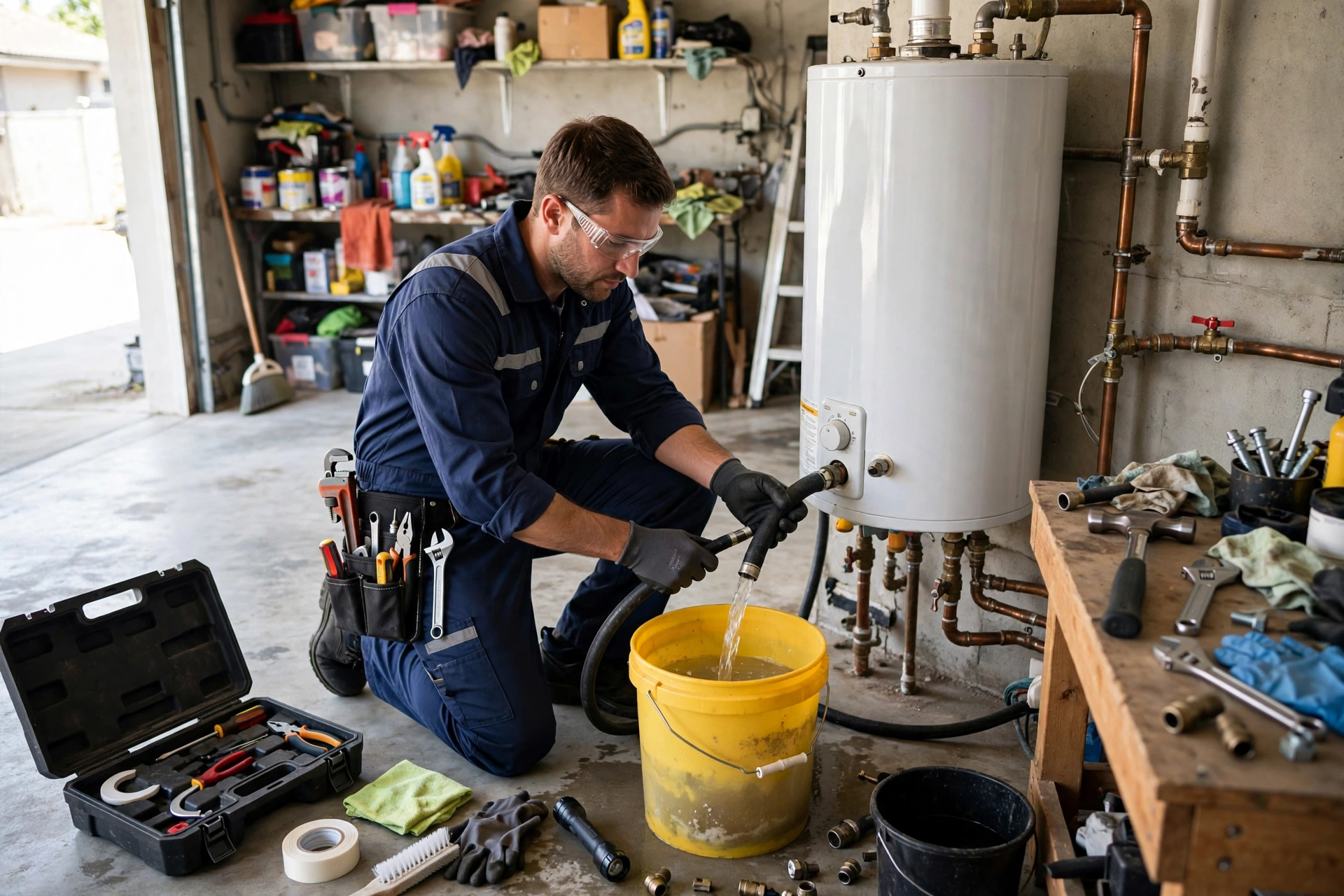
If water is spraying, carefully lift the T&P valve lever for a few seconds to relieve pressure — stand clear, the water is scalding. Attach a hose to the drain valve and route it to a floor drain if you can do so safely.
Step 4: Protect your stuff
Move boxes, tools, and anything absorbent away from the water. Lay towels as a barrier to keep water from reaching drywall — drywall wicks water upward and molds within 48 hours.
Step 5: Document everything
Photograph the leak source, the water spread, and any damaged belongings before you mop. Your insurance adjuster will thank you.
Step 6: Call a professional
For active flooding, call our 24/7 emergency line at (833) 713-2101. For a slow drip, shut everything down and schedule same-day service. Either way, don't restart the heater until it's been inspected.
What NOT to do
- Don't cap or plug a dripping T&P valve — it's a safety device.
- Don't touch standing water near outlets or the heater's electrical compartment.
- Don't use pipe sealant on a leaking tank seam — it can't hold pressure and hides the real problem.
Related Questions
Should I drain the whole tank myself?
Only if you can do it safely with a hose to a proper drain. If the drain valve is seized — common with sediment — don't force it; wait for us.
How long can I go without hot water?
For most households a day is manageable. We offer same-day service precisely so you don't have to wait longer.
Is it safe to leave a leaking heater overnight?
If the water and fuel are off and the area is contained, usually yes. If water is still spreading or you smell gas, call our emergency line immediately.