Heating Element Replacement in Apache Junction, AZ
Electric water heaters depend on two heating elements, and in Apache Junction the lower one lives a brutal life buried in calcium sediment. When an element burns out, you get lukewarm water or none at all.
- 24/7 Emergency Service
- East Valley Coverage
- Upfront Guidance
In Short
Electric water heaters depend on two heating elements, and in Apache Junction the lower one lives a brutal life buried in calcium sediment. When an element burns out, you get lukewarm water or none at all.
Symptoms of a Failed Heating Element
Failed elements speak a clear language once you know it. The signature symptom is lukewarm water that never gets fully hot: the upper element still works for the top third of the tank, but the dead lower element leaves the rest tepid. No hot water at all usually means the upper element failed or a thermostat tripped — the upper element heats first, so its failure kills the whole cycle. Popping, rumbling, or crackling during heating is not the element itself but the sediment coating it, boiling and steaming as the element struggles through the scale. A tripped breaker that will not stay reset can indicate an element shorted to ground through a split sheath. Rust-colored hot water with an element failure often means the tank is also aging out, since scale and corrosion travel together. And a sudden jump in the electric bill with no usage change? An element caked in scale runs far longer to deliver the same heat — you are paying for the sediment's insulation.
Testing: Finding Exactly Which Element Died
Guessing which element died wastes money, so we test rather than assume. With the breaker off and verified dead, we remove the access panels and insulation to expose the element terminals. A multimeter across the terminals tells the story: a healthy 4500-watt, 240-volt element reads around 12 to 13 ohms; an infinite reading means a burned-out element, and a reading to ground means a shorted one. We test both elements and both thermostats, because a failed upper thermostat can mimic a dead lower element and vice versa. We also check the ECO high-limit reset button — if it tripped, we find out why rather than just resetting it, since chronic tripping signals a failing thermostat or a shorted element. Only after the meter identifies the exact failed component do we quote the replacement. This fifteen-minute discipline is the difference between a precise repair and parts roulette.
The Replacement Process, Step by Step
Replacement is straightforward but unforgiving of skipped steps. Power is shut off at the breaker and confirmed dead with a meter at the element terminals — not at the panel, at the element, because mislabeled breakers are common. The tank drains below the element being replaced; the lower element requires a near-full drain. The old element unscrews with an element wrench; in hard-water tanks it is often cemented in by scale, and we work it free without damaging the tank threads. Before installing the new one, we clean the port threads and inspect the gasket seat — a scored seat leaks no matter how tight the new element is. The replacement is matched exactly to the rating plate for wattage and voltage, with a new gasket, torqued to spec. Then the non-negotiable step: the tank refills completely and air purges from the hot taps before the breaker goes back on. Energizing a dry element destroys it in seconds — the most common DIY casualty we are called to fix.
Sediment: The Root Cause in Arizona
In Apache Junction, sediment is not a footnote — it is the reason elements die young. Local water hardness regularly exceeds 15 grains per gallon, and every gallon heated drops calcium carbonate that settles to the tank bottom. The lower element ends up entombed in scale, which insulates it from the water it is trying to heat. The element gets hotter and hotter trying to push heat through the crust until the sheath splits or the internal coil burns open. This is why lower elements here last three to six years instead of the textbook ten. The fix is not just a new element — it is breaking the cycle. During replacement we flush the tank thoroughly through the open element port, which gives far better sediment access than the drain valve alone. We recommend annual flushing afterward, and we check the anode rod in the same visit, because the same aggressive water that kills elements is eating the tank's corrosion protection too.
Electrical Safety: 240 Volts Gets Full Respect
A 240-volt water heater deserves the same respect as any high-voltage appliance. Our lockout procedure is literal: breaker off, panel labeled, and voltage verified absent at the element terminals with a meter before a hand goes near. We check both legs to ground and leg to leg — a half-tripped breaker can leave 120 volts present, which is still lethal. Wire connections get inspected during the job; heat-cycled, corroded, or aluminum-to-copper connections without proper treatment are fire risks we flag and fix. The access panels and insulation go back exactly as found, because missing insulation lets the thermostat read wrong and the panel is part of the electrical enclosure. After restoration, we verify correct amperage draw with a clamp meter — an element drawing far off spec indicates a wiring or supply problem, not a successful repair. Electricity is invisible and unforgiving; every step assumes the circuit is live until the meter says otherwise.
Wattage, Voltage, and Choosing the Right Element
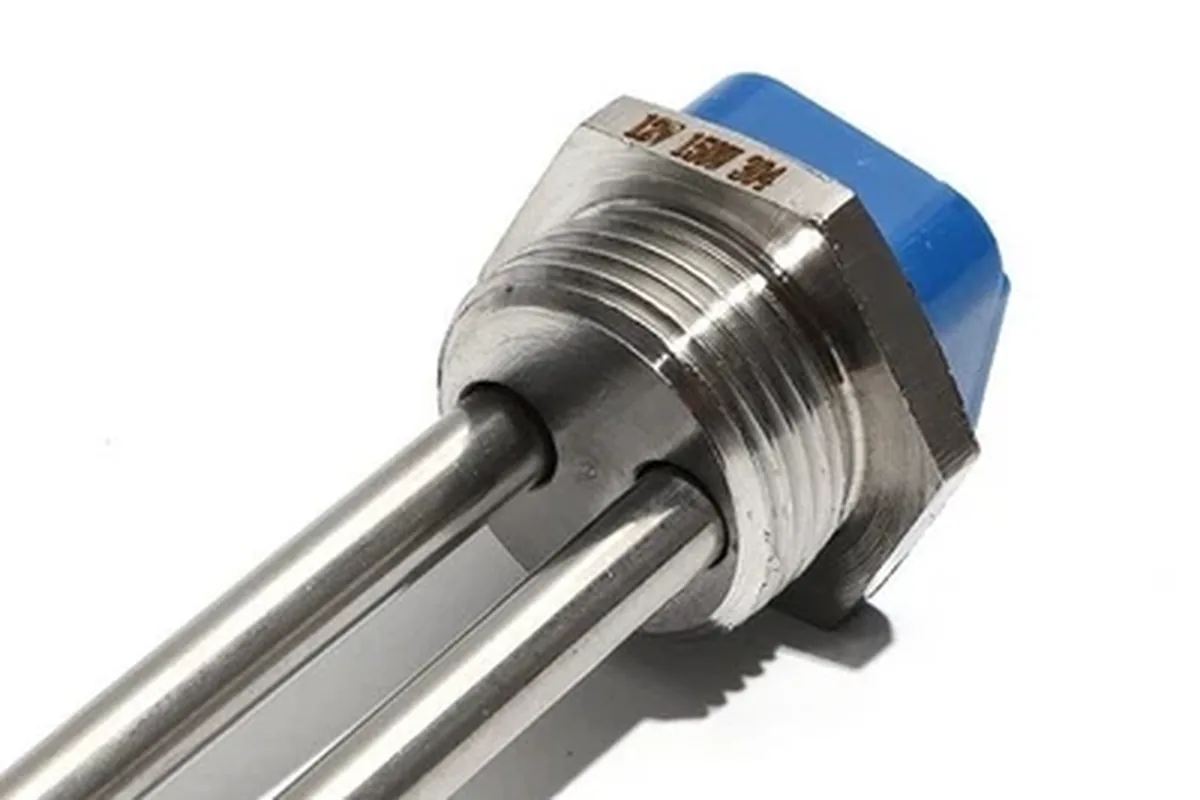
The replacement element must match the original specification — this is not a place for upgrades. Wattage and voltage come from the rating plate: a 4500-watt, 240-volt element in a circuit wired for that load. Installing a higher-wattage element overloads the wiring and breaker, creating a genuine fire hazard; a lower-wattage one simply recovers slowly and frustrates everyone. Where we do exercise judgment is element design: in hard water, we prefer fold-back (low-watt-density) or sandhog-style elements over straight high-density ones, because spreading the heat over more surface area reduces the hot spots where scale bakes on hardest. Thread size is standard 1-inch on residential tanks, but gasket condition is not — we always install a new gasket, since reusing the old one is the most common source of post-repair seepage. Matched spec, better design, new gasket: that is the formula for an element that survives local water.
Frequently Asked Questions
My water is only lukewarm. Is it the heating element?
Almost always the elements or thermostats, in that order. In Apache Junction, sediment-baked lower elements are the single most common cause of lukewarm water we see. Our diagnostic tests both elements and both thermostats with a meter, so we replace exactly what failed — often one $50 part rather than a $500 guess.
Is it worth replacing an element on an old water heater?
On most tanks, yes — elements are designed as replaceable wear parts, and swapping one is far cheaper than a new heater. The exception is a tank past ten years with rust in the water or base corrosion; then the element job buys time on a dying tank and we will say so. Under eight years with clean water, element replacement is absolutely the right call.
Which element fails first, upper or lower?
Lower, by a wide margin. The lower element sits in the sediment zone at the tank bottom, where calcium scale bakes onto it and insulates it until it overheats and burns out. The upper element lives in cleaner water and typically lasts years longer. That is why lukewarm water — upper working, lower dead — is the classic symptom.
Can I replace a heating element myself?
It can be, but only with strict precautions: breaker locked off and verified dead with a meter, tank drained below the element, and the correct wattage and voltage replacement. The risks are real — 240 volts kills, and an element energized in air burns out instantly if you refill improperly. If any of that sounds uncertain, call (833) 713-2101 and let a professional handle it.
How long should elements last in Arizona hard water?
In soft-water regions, seven to ten years. In Apache Junction, three to six is typical for a lower element that has never seen a flush, because scale is the killer, not age. Annual flushing and a healthy anode rod can push elements toward the upper end of that range. If you are replacing lower elements every two years, the real problem is sediment, not the elements.
Does the replacement element need to match the old one exactly?
Yes — wattage and voltage must match the original specification on the rating plate. A higher-wattage element draws more current than the wiring and breaker are sized for, which is a fire hazard. A lower-wattage element works but recovers slowly. We match exactly, and we recommend fold-back or sandhog-style elements that resist scale buildup better than straight elements in hard water.
Water Heater Leaking? Call Right Now
One call connects you with an independent local pro ready to help — day or night.
(833) 713-2101