TPR Valve Replacement in Apache Junction, AZ
The temperature-and-pressure relief valve is your water heater's critical safety device — the last defense against overpressure. When it drips constantly, discharges, or seizes with age, it needs prompt replacement.
- 24/7 Emergency Service
- East Valley Coverage
- Upfront Guidance
In Short
The temperature-and-pressure relief valve is your water heater's critical safety device — the last defense against overpressure. When it drips constantly, discharges, or seizes with age, it needs prompt replacement.
What the T&P Valve Does — and Why It Matters
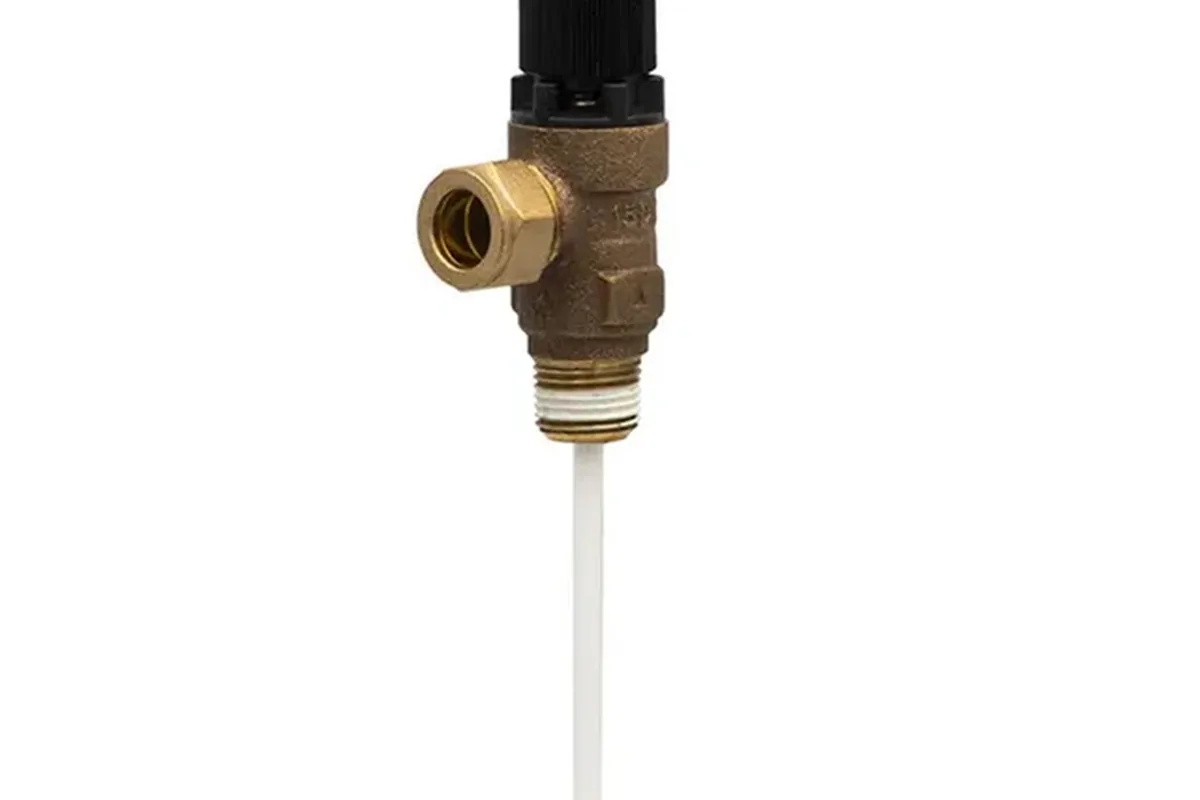
The T&P valve — temperature and pressure relief — is the single most important safety device on your water heater, and it is the one most homeowners ignore. Its job is simple and vital: if tank temperature exceeds about 210 degrees or pressure exceeds 150 PSI, the valve opens and dumps water, preventing the tank from becoming a pressure vessel with no exit. Water heaters without working relief valves have exploded with enough force to destroy homes — this is not theoretical. The valve contains a spring, a seat, and a thermal probe extending into the tank; any of them can fail. Springs weaken with age and heat cycling, seats foul with mineral deposits, and probes corrode. A valve that cannot open is a silent hazard — everything looks normal until the day it is needed. That is why replacement on age and condition, not just on visible failure, is the professional standard.
Signs Your T&P Valve Needs Replacement
T&P valves fail in two directions, and both demand attention. The obvious failure is the valve that drips or discharges: constant weeping from the discharge pipe, periodic gushing after heating cycles, or a pipe that is warm when it should be cold. Dripping often traces to a fouled seat — mineral deposits prevent full closure — or to system overpressure from thermal expansion or high municipal pressure. The dangerous failure is the valve that does nothing: seized shut from years of mineral cementing, it will not open on test and will not open in an emergency. Corrosion on the valve body, a discharge pipe that shows mineral crust (evidence of past weeping now sealed shut), and a valve older than seven years are all replacement triggers. We also watch for the missing-valve scenario on very old installations and the capped-valve scenario — a discharge pipe plugged by a previous owner — which we correct immediately as a safety emergency.
The Replacement Process, Step by Step
T&P replacement is a pressurized-system procedure done in a fixed sequence. Energy is shut off — breaker for electric, gas control to off — because we will be draining below the valve level. The cold-water inlet closes, and we open a hot tap to break vacuum. The tank drains below the T&P port, which sits near the top, so only a partial drain is needed. The discharge pipe is disconnected first, then the old valve unscrews — in hard-water tanks these are often mineral-welded in place, and we work them free without damaging the tank threads. The new valve, rated for your tank's BTU input and with the correct probe length reaching into the water, gets thread sealant and is torqued to spec. The discharge pipe reconnects (or is replaced — see below), the tank refills fully with air purged, and energy is restored. Final step: we lift the test lever to verify strong flow and clean shutoff, proving the new valve actually works.
Discharge Pipe Requirements
The discharge pipe is not an accessory — it is part of the safety system, and wrong piping kills the valve's protection. Code requires the pipe to be full-size (matching the valve outlet, typically 3/4 inch), to discharge downward by gravity, and to terminate 6 to 24 inches above a floor drain or exterior grade where scalding discharge will not harm people. Prohibited: reductions in pipe size, threaded caps on the end, upward loops that trap water, and termination into a crawlspace or concealed location. We see violations regularly — pipes terminated inside walls, reduced to garden-hose size, or simply missing. During replacement we bring the discharge piping into compliance, because a new valve on a blocked pipe is no safer than the old valve. On garage installations the routing is usually straightforward to exterior grade; on interior or attic installations in newer builds, we route carefully to a safe termination point. This is not optional trim — it is the difference between a controlled release and a scalding surprise.
Testing vs. Replacing: Why We Replace
Homeowners often ask whether a dripping valve can just be cleaned or tested back to health, and the honest answer is: sometimes briefly, never reliably. Lifting the test lever can flush debris from the seat and stop a drip — for a while. But a valve that needed that flush has a fouled seat and weakened spring; the drip returns, usually within months. More importantly, testing is diagnostic, not restorative: a valve that passes the lever test today can still have a fatigued spring that opens late in a real overpressure event. Given that a T&P valve costs a fraction of a service call and protects against catastrophic failure, replacement is the only professional recommendation for a valve showing any symptoms or past its service life. We test every valve we encounter and replace without hesitation when the test is marginal — 'probably fine' is not a standard we apply to safety devices.
Local Factors: Hard Water, Heat, and Pressure
Local conditions are unkind to relief valves. Hard water deposits minerals on the seat and in the spring chamber, which is why valves here seize or weep earlier than in soft-water regions — annual lever testing matters more here, not less. Garage heat accelerates spring fatigue; a valve baking in 130-degree ambient air ages faster than one in a conditioned basement. Municipal water pressure in parts of Apache Junction runs high, which keeps relief valves living near their threshold and shortens seat life — we measure house pressure at every T&P visit and recommend a regulator when it exceeds 80 PSI. Thermal expansion is the other local factor: many homes have check valves or pressure-reducing valves creating closed systems, and without a working expansion tank, every heating cycle spikes pressure against the relief valve. When we replace a T&P valve, we check the expansion tank too, because the valve is often the messenger, not the whole message.
Frequently Asked Questions
My T&P valve drips a little. Is that normal?
A brief discharge after heating cycles in a closed plumbing system can be normal thermal expansion — but it means you need an expansion tank, not that the valve is fine. Continuous dripping, discharge unrelated to heating, or a valve that has visibly aged past five to seven years needs replacement. When in doubt, have it tested: a valve that will not open on test is dangerous regardless of whether it drips.
How do I test my T&P valve?
The lever test is a basic check, not a certification. Lift the lever briefly — water should flow strongly and stop completely when released. If nothing flows, the valve is seized and must be replaced immediately. If it dribbles afterward, the seat is fouled and the valve needs replacement. Test annually, and stand clear: the discharge is scalding hot.
Can I cap off a leaking T&P valve?
Absolutely not — never. Capping or plugging a T&P valve removes the tank's only overpressure protection and creates the conditions for a steam explosion. This is one of the most dangerous things a homeowner can do to a water heater. If the valve discharges constantly, the fix is diagnosing the pressure problem, not silencing the alarm.
Does the discharge pipe need to be replaced too?
Yes, and it is inexpensive compared to the protection it provides. The pipe must terminate 6 to 24 inches above a floor drain or exterior grade, discharge downward, and be full-size with no restrictions. On garage installations this is usually simple; on attic or interior-closet installations in newer builds, routing can be more involved — we handle the routing as part of the job.
How often should the T&P valve be replaced?
Five to seven years is the practical service life, shorter in hard water where mineral deposits foul the seat and spring. If you cannot remember the last replacement and the heater is over seven years old, assume it is due. We check the valve's date code when visible and recommend replacement on age alone for valves past their prime — this is cheap insurance.
What if the new valve starts dripping too?
Replacing the valve without addressing overpressure just buys time until the new valve discharges too. We check house water pressure and the expansion tank as part of every T&P visit. If pressure exceeds 80 PSI or the expansion tank is waterlogged, we fix that in the same visit so the new valve lives a quiet life.
Water Heater Leaking? Call Right Now
One call connects you with an independent local pro ready to help — day or night.
(833) 713-2101