Thermostat Replacement in Apache Junction, AZ
Electric water heaters use upper and lower thermostats to manage heating cycles, and when one fails you get scalding water, lukewarm water, or a tripped safety switch.
- 24/7 Emergency Service
- East Valley Coverage
- Upfront Guidance
In Short
Electric water heaters use upper and lower thermostats to manage heating cycles, and when one fails you get scalding water, lukewarm water, or a tripped safety switch. Apache Junction's garage heat and sediment-heavy water wear them faster than average.
Thermostat Failure Symptoms, Decoded
Thermostat failures produce some of the most confusing symptoms in water heating because two thermostats share one job. Water that is scalding hot regardless of the dial setting means a thermostat stuck closed — it never tells the element to stop, and this is the dangerous failure mode that trips the ECO safety switch. Lukewarm water that never fully heats points to the opposite: a thermostat stuck open or with burned contacts that never calls for heat properly. Hot water that runs out unusually fast often means the upper thermostat failed — the upper element never reheats the top of the tank, so you are drawing on a fraction of capacity. The ECO reset button tripping repeatedly is the system's distress signal for overheating, usually a failed lower thermostat letting the bottom overheat. And water temperature that swings wildly between hot and cold suggests a thermostat with an erratic sensor. Because sediment can mimic thermostat symptoms by insulating the sensor, we test rather than assume — but these patterns tell us where to look first.
Upper vs. Lower: Which Thermostat Failed
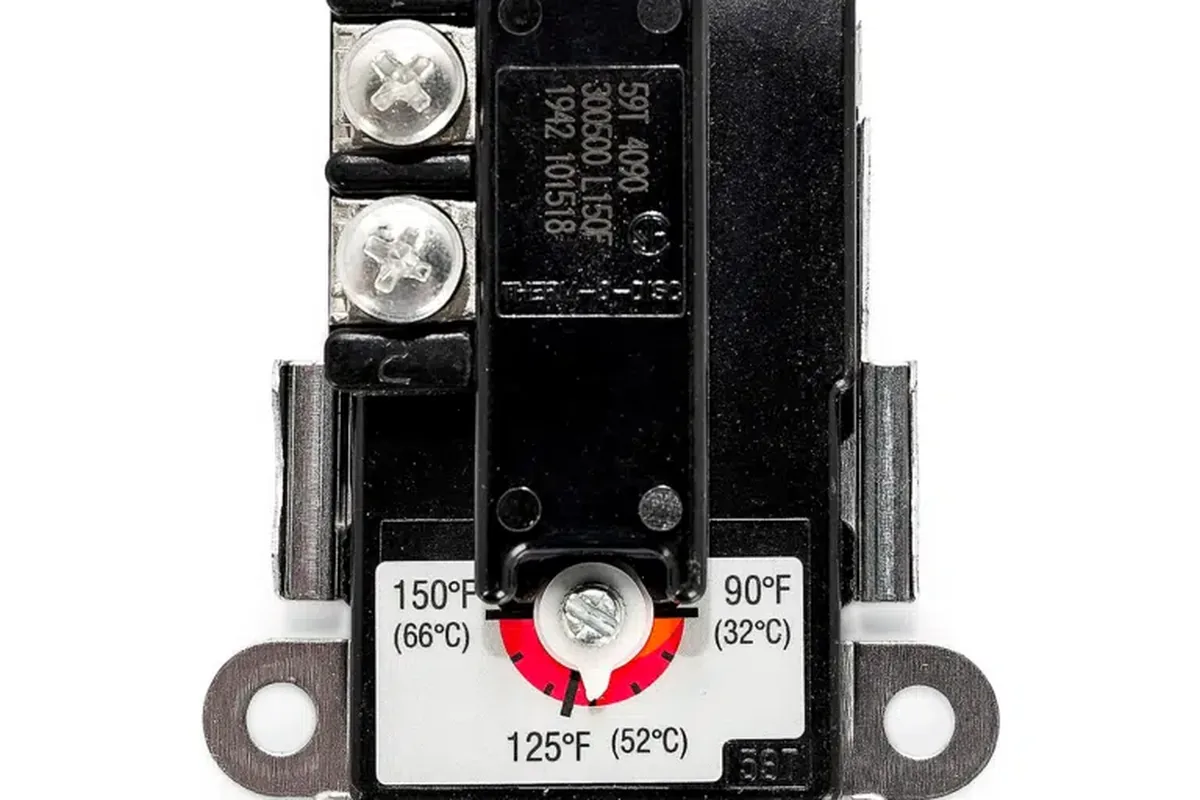
An electric tank has two thermostats with distinct roles, and knowing which failed changes the repair. The upper thermostat is the master: it controls the upper element and contains the ECO high-limit safety switch. It heats the top third of the tank first, then hands off to the lower thermostat. The lower thermostat controls only the lower element and does the bulk heating of the full tank. Diagnostic logic follows the symptoms: no hot water at all with a tripped ECO points at the upper thermostat or an overheating lower section; lukewarm water with the ECO intact usually means the lower thermostat or lower element; rapid hot-water depletion implicates the upper. We test each thermostat with a meter — checking continuity through the contacts at temperature and verifying the ECO resets and holds. The thermostats are inexpensive parts, but the testing is what makes the repair precise instead of a guess.
The Replacement Process, Step by Step
Thermostat replacement is a controlled electrical procedure. Power is shut off at the breaker, the panel is labeled, and voltage is verified absent at the thermostat terminals with a meter — we test before touching, every time. The access panels and insulation come off to expose the thermostats; we photograph the wiring before disconnecting anything, because the upper-to-lower wiring sequence must be exact. The failed thermostat unclips from its bracket — it must sit flat against the tank wall, since an air gap makes it misread temperature, a detail that matters enormously in hot garages. The new thermostat, matched to the model's temperature range, clips in flush, and wiring reconnects exactly per the diagram. We set both thermostats to the same temperature — 120 degrees is the standard recommendation — since mismatched settings cause the elements to fight each other. Power is restored only after panels and insulation are back in place, and we verify proper cycling by monitoring the first heat cycle.
Temperature Settings: Safety and Efficiency
Temperature setting is both a comfort and a safety decision, and we discuss it at every thermostat visit. The widely recommended setting is 120 degrees Fahrenheit: hot enough for household needs, cool enough to prevent most scald injuries, and efficient. Every 10 degrees above 120 increases scald risk dramatically — 140-degree water causes third-degree burns in seconds, a real danger for children and older adults. Higher settings also accelerate sediment baking and anode consumption, which matters in this hard water. Some households need 140 degrees for dishwashers without boosters or for medical reasons; in those cases we discuss mixing valves that deliver safe temperatures at the tap while the tank runs hotter. We also verify the ECO high-limit is functional after setting — it is the last line of defense if a thermostat ever sticks closed again. The dial gets set deliberately, not left where the last person put it.
Electrical Safety: Full Lockout, Every Time
Thermostat replacement is 240-volt work inside an electrical enclosure, and we treat it accordingly. Lockout is literal — breaker off, verified dead at the terminals with a meter, not assumed from the panel label. We check both hot legs, because a partially tripped breaker can leave one leg energized. Wire terminals are inspected for heat damage, corrosion, and loose connections; a loose terminal on a thermostat is a leading cause of the erratic behavior that brought us there, and we see it often in garages where thermal cycling loosens connections over years. Aluminum wiring, found in some older local homes, gets proper antioxidant treatment and rated connectors — never a casual twist. The access panels and insulation are reinstalled completely before power returns; they are part of the enclosure and the thermal design, not cosmetic covers. Finally, we clamp-meter the element current to confirm the new thermostat is switching correctly under load.
Why Garage Heat and Sediment Kill Thermostats Faster
Thermostats do not live in a laboratory — they live in Apache Junction garages, and that shortens their lives. Summer ambient temperatures over 120 degrees mean the thermostat's bimetal sensor operates in an already-hot environment, narrowing its effective range and accelerating contact wear from more frequent cycling. Sediment is the accomplice: scale coating the lower tank wall insulates the lower thermostat's sensor from the water, so it reads low and overheats the bottom — the classic cause of chronic ECO trips here. Monsoon dust infiltrates access panels and coats contacts, adding resistance that shows up as erratic temperature swings. And hard-water scale on elements forces longer heating cycles, which means more switching cycles on the thermostat contacts per day. The practical upshot: thermostats here commonly need attention at eight to ten years rather than the twelve-plus the manual suggests, and any thermostat visit should include a sediment assessment.
Frequently Asked Questions
Why does the reset button keep tripping?
The ECO (energy cut-off) is a safety device that trips when water temperature exceeds safe limits — usually around 180 degrees. Chronic tripping means something is driving overheating: a stuck thermostat, a shorted element, or sediment-baked lower components. Resetting without finding the cause just waits for the next overheat. We diagnose the root cause and fix it, because a tripped ECO is the system telling you something is wrong.
Will flushing the tank fix thermostat problems?
It can, but only to a point. Sediment insulates the lower thermostat's sensor from the actual water temperature, so the thermostat misreads and either overheats or underheats. A flush often improves behavior noticeably. But a thermostat with burned contacts or a failed sensor will not be fixed by flushing — if problems persist after a flush, the thermostat needs testing and likely replacement.
Should both thermostats be replaced together?
We replace them as a pair as standard practice. The thermostats are the same age, have endured the same heat and sediment, and the incremental cost of the second one during the same visit is small. Replacing only the failed one and returning six months later for its twin costs you a second service call. Paired replacement is simply the economical choice.
How long do water heater thermostats last?
Thermostats typically last eight to twelve years, but garage heat shortens that here. If your heater is past year eight and showing temperature symptoms, thermostats are prime suspects. Under five years, we look harder at elements and sediment first — though a single overheating event can kill a young thermostat, so age is a guide, not a rule.
Can I replace a thermostat myself?
Only with full electrical precautions: breaker off, locked, and verified dead with a meter at the terminals. The wiring is 240 volts and the access panels are part of the electrical enclosure. Miswiring a thermostat — swapping upper and lower leads, for example — creates dangerous operating conditions. If you are not certain about the wiring diagram on the access panel, call (833) 713-2101.
How do I reset the ECO button?
Yes, and it takes seconds. Find the access panels on the tank side, remove the insulation, and press the red reset button on the upper thermostat. But treat a trip as a symptom: if it trips once after years of service, it may be a fluke; if it trips again, something is wrong and the heater needs diagnosis before the next reset.
Water Heater Leaking? Call Right Now
One call connects you with an independent local pro ready to help — day or night.
(833) 713-2101